Capturing the Charm of Elan Valley: A Day's Adventure
A day trip to the Elan Valley to capture its beauty and magnificence
Dave Riley
1/8/20264 min read

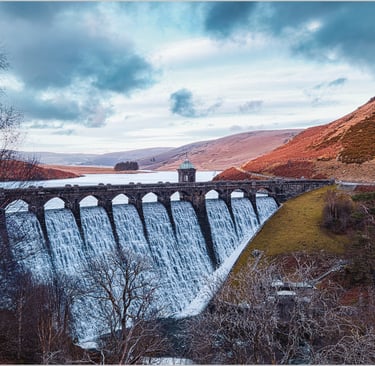
A Valley Shaped by Time and Water
Before you even lift a camera in the Elan Valley, it helps to know that you are walking through layers of history as much as landscape.
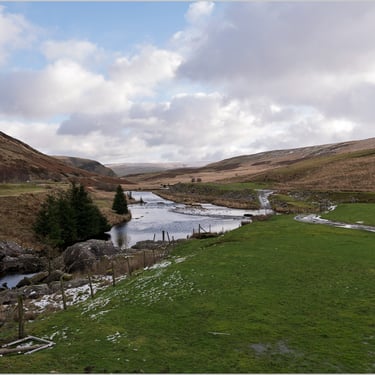
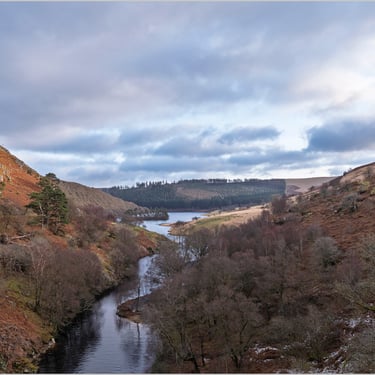
Known in Welsh as Cwm Elan, the valley stretches across roughly 70 square miles of upland moorland, woodland, rivers and sweeping hills west of Rhayader in Powys. People have lived here since prehistoric times, long before cameras, cars or the idea that Birmingham might one day drink Welsh rainwater.
That idea arrived in the late nineteenth century, when Birmingham’s rapid growth created a serious thirst for clean water. In 1892, Birmingham Corporation secured an Act of Parliament allowing them to buy land in the Elan and Claerwen Valleys and build one of the most ambitious water supply schemes Britain had ever seen.
Work began around 1893, and it was anything but gentle. Farms, homes and even a church were demolished or flooded to make way for the reservoirs. Entire communities were displaced. A dedicated industrial railway was carved into the valley to haul men, stone and machinery into what had previously been quiet, remote countryside.
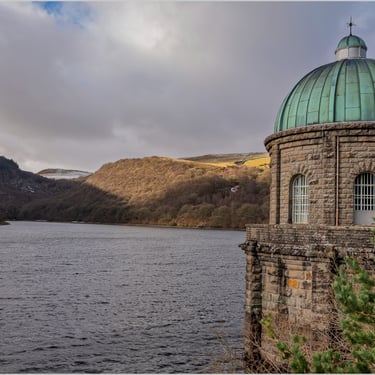
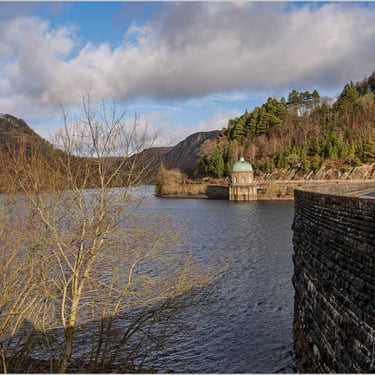
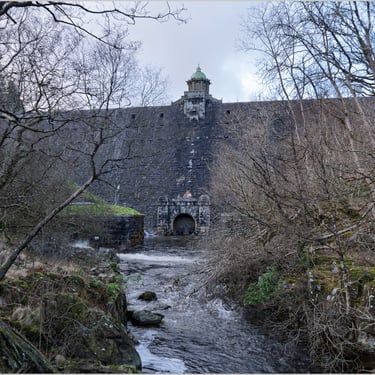
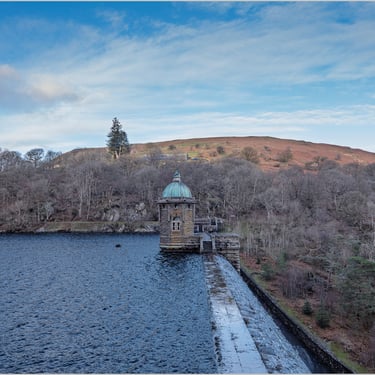
Between the 1890s and 1904, the great Victorian dams of Craig Goch, Pen y Garreg, Garreg Ddu and Caban Coch rose across the River Elan. These were not just functional structures but statements of confidence, built from stone quarried on site and designed to last generations. The system of aqueducts and pipelines still carries water by gravity all the 70miles to Birmingham still today.
The scheme was officially opened in July 1904 by King Edward VII and Queen Alexandra. Later, work continued in the Claerwen Valley, though it was interrupted by the First World War. The Claerwen Dam was eventually completed in 1952 and opened by Queen Elizabeth II, adding a more modern chapter to the valley’s story.
What began as a feat of industrial necessity slowly became something else entirely. The dams, reservoirs and surrounding hills gained recognition not only for their engineering but for their quiet grandeur. Elan Village, built for workers in an Arts and Crafts style, still sits at the heart of the valley. A visitor centre followed in the 1980s, helping to tell the story of a place where human ambition and wild nature learned to coexist.
Today, the Elan Valley is treasured for its walking and cycling routes, dark skies, wildlife and unmistakable sense of calm. It is a landscape that rewards patience and curiosity.
First Things First
Our own journey began, as all good adventures should, with tea and a bacon roll at the Visitor Centre. No exploring was going to happen on an empty stomach. The air was sharp, the valley stretched out ahead of us, and the first glimpse of the reservoirs hinted that we were in for something special.
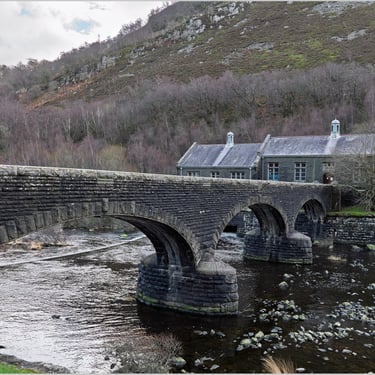
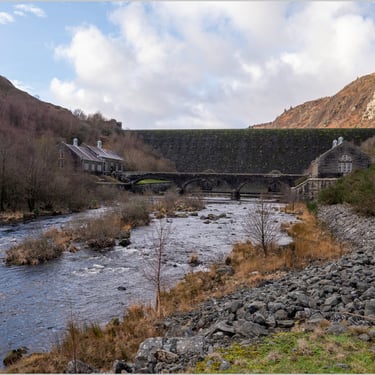
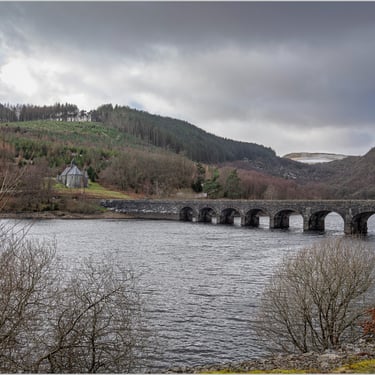
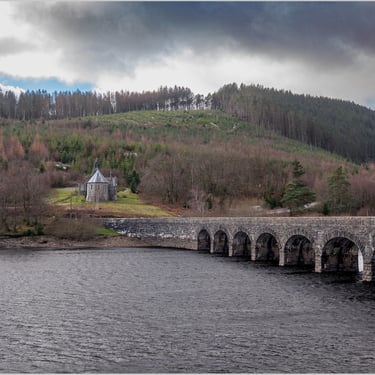
Properly fuelled, we set off towards the dams, beginning with Caban Coch. Its broad walls and calm waters made an impressive introduction to the scale of Victorian ambition. From there we moved on to Garreg Ddu, where the size of the reservoir and the wide, open views seemed to slow time itself.
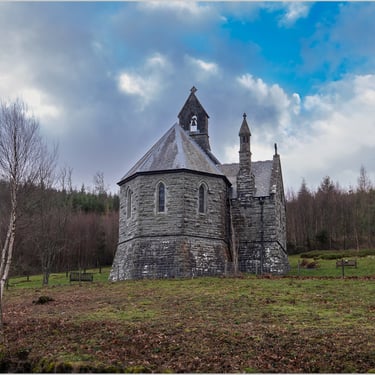
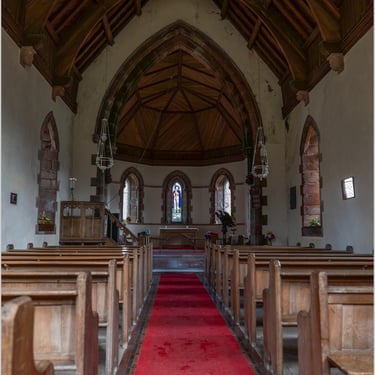
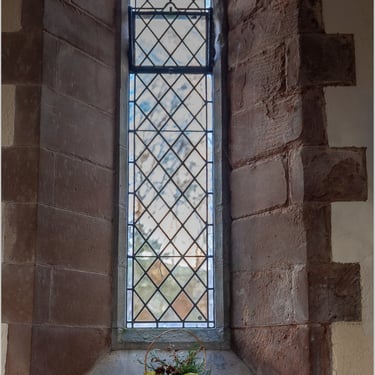
Next came Nantgwyllt Church, tucked quietly into the valley like a secret you could easily miss. Its stones feel heavy with memory, whispering of the community that once lived and worshipped here before the waters reshaped everything. It was a moment of stillness that balanced the grandeur of the dams beautifully.
Pen y Garreg followed, each dam revealing its own personality and perspective. Sunlight played across the water, reflections shifted with every step, and cameras clicked almost without thinking.
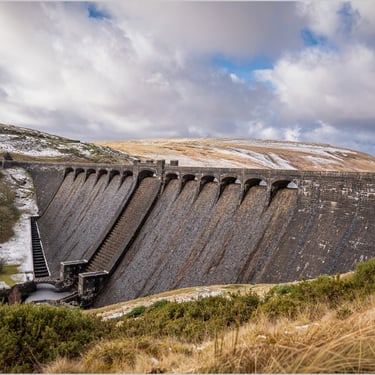
We ended our Elan Valley circuit at Craig Goch. The largest and perhaps most dramatic of the original dams, it stands as a monument to Victorian engineering confidence. Solid, vast and quietly awe inspiring, it felt like the perfect full stop to the day.
As the light faded, we headed home tired, cold and quietly exhilarated, carrying with us the sights, sounds and crisp mountain air of a valley where history, nature and human ingenuity sit side by side.
Takeaways from the Trip
This was far more than a photography outing. Every frame we captured carried a story of labour, loss, ambition and beauty. The Elan Valley asks you to look closely, not just at the landscape, but at what it took to create it.
Whether you’re a seasoned photographer or just starting out, the valley offers endless opportunities to slow down and see differently. There is always another angle waiting, another mood forming in the clouds. We will definitely be back.
A Special Thanks
I also need to give a huge thank you to Kev and Maddie, who looked after me and kept me right all day. Doing trips like this when you only have about 25 percent of your vision left is not straightforward, and they were incredibly generous in inviting me along.
They also had to put up with questionable humour and my uncanny ability to look permanently drunk while standing perfectly still. That alone deserves a medal. Thanks both.







Setting Out on a Photographic Adventure
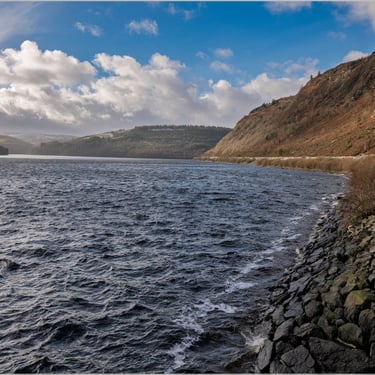
The Elan Valley in Mid Wales is one of those places that feels like it’s deliberately hiding from the modern world. Even better, it seems to save its most dramatic performances for winter. If you’re craving a picturesque escape, don’t let a bit of cold put you off. On a winter’s day, the Elan Valley turns into a brooding, cinematic wonderland of mist, stone and silence.
So naturally, we did the sensible thing. We grabbed our camera gear and hit the road.
There were three of us, bundled up in woolly hats, fingerless gloves and armed with hot flasks (There is a story there, but that can wait for another day.) that suggested either excellent planning or a vague fear of hypothermia. All of this was stuffed into our bags. Twice, apparently.